
In our September post “No Man Is an Island” we explored the Emotional Intelligence skill of Relationship Management in a contact centre environment and showed how it seems to increase with age.
In this article we’re going to keep a focus on both EI and contact centres, but we’re shifting perspective from age to gender, and we’re going to consider another – more personal – EI skill: self-awareness.
Self-awareness is the ability to know ourselves – our qualities and limits – and be comfortable in our own skin.
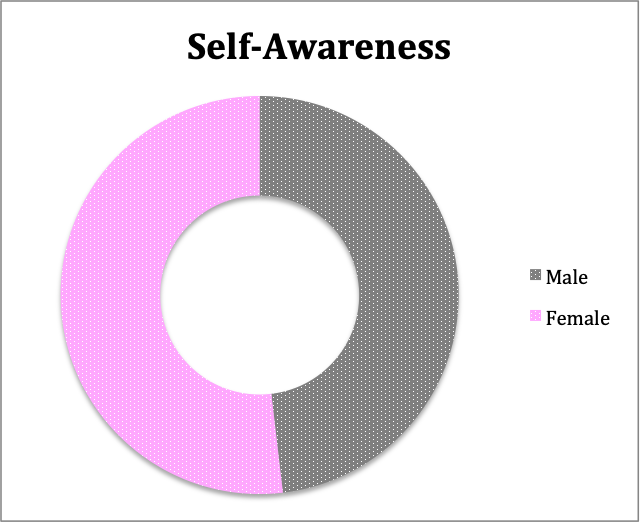
Research to date shows that women outperform men on self-awareness, and our data confirm that this is true also in call centre environments.
But what can we all do to further develop our self-awareness skills?
To discover more, have a look at this Ted talk by Professor Valon Murtezaj: https://www.youtube.com/watch?v=LH12DmOwWRk
T2 courses explore emotional intelligence techniques that help you thrive at work and at home.
Playing Games with My Emotions
We did say that our hobbies reveal an awful lot about us – much more than we think they would (see “Tell Me Your Hobby. I’ll Tell You Your Style”, 26 Sept. 2016).
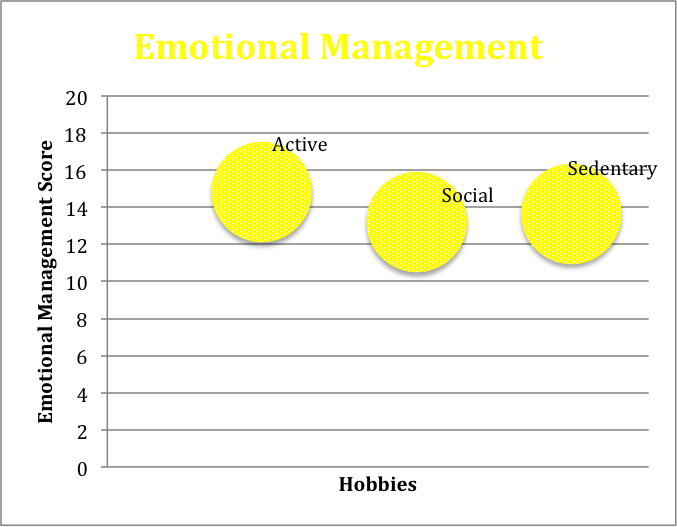
Consider emotional management – one of the most useful and difficult EI skills to master. Would you have guessed there is a correlation between a person’s hobby type and emotional management level?
Yet this is what we found out.
Customer service advisors with active hobbies seem to be able to keep their emotions at bay more than those with sedentary or social pastimes.
Could this be the umpteenth positive effect of exercise – not only benefitting our physical health and boosting our brain power, but also strengthening our emotional management?
Want to know more about Emotional Intelligence and how it can enhance your team’s performance? Get in touch with T2’s Psychologists today.
Tell Me Your Hobby. I’ll Tell You Your Style
In last week’s post we shed some light on gender preferences in conflict management styles. Today, our focus remains on conflict management, but we’re shifting attention to its link to leisure activities.
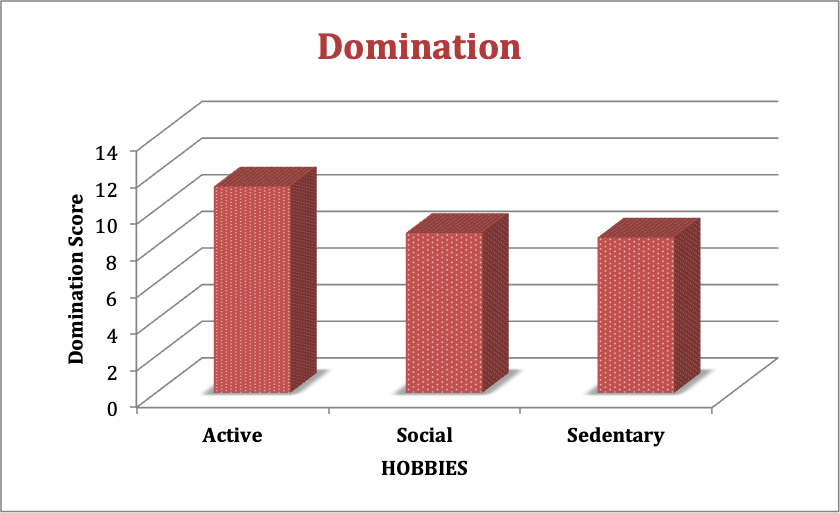
Our research in a UK contact centre shows that there seems to be a correlation between domination levels and active hobbies.
But let’s look at the results in more detail: CSRs with active pastimes (i.e. sports, fitness classes, outdoor activities, etc.) tend to score higher on domination than those with social ones (pub quizzes and social drinking, for example).
What’s more, agents with both active and social hobbies seem to be more dominant in a situation of conflict than those with sedentary ones (such as reading, gaming, painting and knitting).
You can’t image how many more facets of your personality your hobbies reveal… Find out in the next few weeks!
Interested in discovering more about conflict management? Drop us a line at info@t2-uk.com.
Can’t We All Just Get Along?
Conflict. Conflicto. Conflit. Konflikt. Conflito. Conflitto. There doesn’t seem to be much difference in the ways various tongues express the concept of conflict.
What is distinct is the way each and every one of us reacts in a situation of conflict, and tries to manage it. There is no right or wrong approach, just different ones depending on the situation.
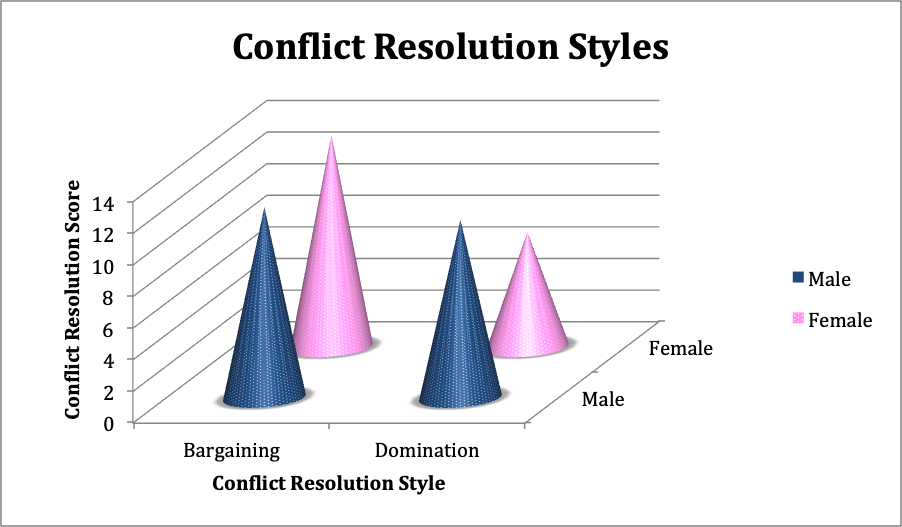
We’ve assessed the conflict resolution styles of a group of contact centre agents, and some gender preferences came to the surface. While most styles don’t display any remarkable variation between male and female agents, it appears that women score higher on bargaining, and men score higher on domination.
As Desmond Tutu – the famous Peace Nobel Prize Winner – says, next time you’re facing conflict, “Don’t raise your voice, improve your argument” – in whatever language that may be.
T2 workshops give delegates tools and strategies to comprehend the process of conflict, deal with it, and minimise it in the future.