
I bet you’ve all heard we design and deliver Psycho-Linguistic training courses for customer service excellence. And probably you’ve recently read we also provide outsourced writing / copywriting services. But did you know that T2 also offer Psychological Counselling?
You’re probably wondering what our team of Psychologists exactly do, so wonder no more. First of all, they compile pen pictures, namely individual profiles, of the delegates who participated to our courses, in order to assist in their continuous development. Secondly, they assess and provide feedback on the strengths and weaknesses of Middle and Senior Managers. Last but not least, they create behavioural questionnaires.
Our Research
You’ll agree there is a huge amount of latent talent lying dormant in Call Centres, worldwide.
To identify the personality traits and key behavioural skills of the best contact centre advisors, we decided to carry out a one-year research project with one of our major UK clients, British Gas.
During our training programmes, we invited delegates to complete a series of psychological questionnaires. These measured their levels of optimism, the clarity of their personal values, their stated feelings of stress, as well as their Emotional Intelligence and conflict management styles.
Working with Senior Management, we then tracked customer service metrics of individual agents, and in this way identified the personality traits and behavioural skills of the elite agents who reduced repeat calls by 100% whilst simultaneously increasing NPS.
Finally, this information has been used by T2 Psychologists to create a Behavioural Profile Questionnaire (BPA), now available on-line.
BPA
The psychological/behavioural instrument T2 has developed has a two-fold benefit.
On the one hand, it can be used in recruitment and selection initiatives, allowing Companies to accurately predict the most suitable recruits for future employment.
On the other, this knowledge will also allow companies to assess existing staff and consider whether the position they hold is the ‘best fit’ for their talents and abilities within that division of a call centre. It can also help employers to determine what adjustments could maximise the performance and contribution of employees.
As Brian Tracy, the famous American motivational speaker and author said, “As a business owner or manager, you know that hiring the wrong person is the most costly mistake you can make.”
So don’t waste any more time, money or resources. Contact us to discover more about our psychometric questionnaires, and start hiring the best people for your contact centre. www.t2linguistics.com | info@t2linguistics.com
Key Personality Measures of Tutors and Assessors – Part II
Some teachers leave their mark on an entire generation of students. The quality of their lessons, and the inspirational style of their teaching can transform young minds.
Right here in Wales we don’t need to look any further than the English teacher Philip Burton, who took the young Richard Jenkins under his wing and gave back to the world Richard Burton: brilliant Shakespearean actor and international film star, who married the most beautiful woman in the world, twice.
So what is it that makes some teachers outstanding?
Our research in at a well-known Welsh College focused specifically on personality traits of tutors who students assessed as exceptional.
Last week we reported that exceptional tutors and assessors have positive conflict resolution styles (collaboration, consensus and guiding), and score high in Emotional Intelligence for relationship management and emotional coaching.
What about their outlook on life. Are they optimistic or pessimistic?
Psychometric questionnaires revealed a significant score: some 68.3% of the sample group who students rated as exceptional were optimistic.
They have a positive outlook on life. They infect their students with hope. With the belief good things do happen. That anything is possible if you work hard enough.
What’s more, we identified a strong correlation between Optimism and Resilience.
That’s what took Richard Jenkins out of his penury in Wales and allowed him to use his money to support his family, local communities in South Wales, Macmillan Cancer Research, Morrison Hospital Burns unit … and aspiring young actors in the Welsh College of Music and Drama.
Drop an exceptional teacher into the community and who knows how far the ripples will go?
T2 Cuts DVLA Complaints by 20%
The Driver and Vehicle Licensing Agency (DVLA) has just reported a 20% drop in complaints as a result of the training we designed and delivered over the past fourteen months.
Every year the Agency deals with 45 million customers from a staggeringly diverse customer base. The call centre alone takes 12.5 million calls, apart from the letters and emails it receives.
Having seen what we achieved when we transformed customer communication at British Gas, DVLA asked us to come in and work our magic again.
Chief executive Oliver Morley has catapulted this government organisation into the 21st Century by getting rid of what he calls ‘old-school technology’, and digitising most of DVLA’s services.
He wanted to do the same for its customer communication, turning adequate into ‘Best in Class’.
With this goal in mind, we created a bespoke training course for DVLA using Psycho-Linguistics – our unique blend of psychology and language. By giving call centre agents a better insight into human behaviour, they began to understand how to deal with people in a far more sophisticated way.
And the language strategies they’ve mastered allow them to control the emotional reaction callers have to the words used in conversations. They can now strip negatives out of calls, use five techniques to control tone, and harness connotation to project the personality and brand values of DVLA more effectively.
They can also slip effortlessly between the five different types of listening and know how to use Psycho-Linguistics to get the best results.
And just for them, there was a section on how to enhance their resilience. Taking 130–150 calls a day, six days a week, throughout the year is no mean feat.
So everyone is delighted to find the specialist training provided by T2, combined with the hard work of the call centre team, and the commitment of executives at DVLA has paid dividends.
Before the training revolutionised calls, the ‘old-school’ style of communication created the image of the Agency. We then re-surveyed the same people following the course to see how things had changed. DVLA certainly looks a more trustworthy, friendly, dynamic body to deal with now than it did before the Mindset Project began.
‘If you wish to know the mind of a man, listen to his words,’ says the Chinese proverb. You could say the same for a commercial or government organisation.
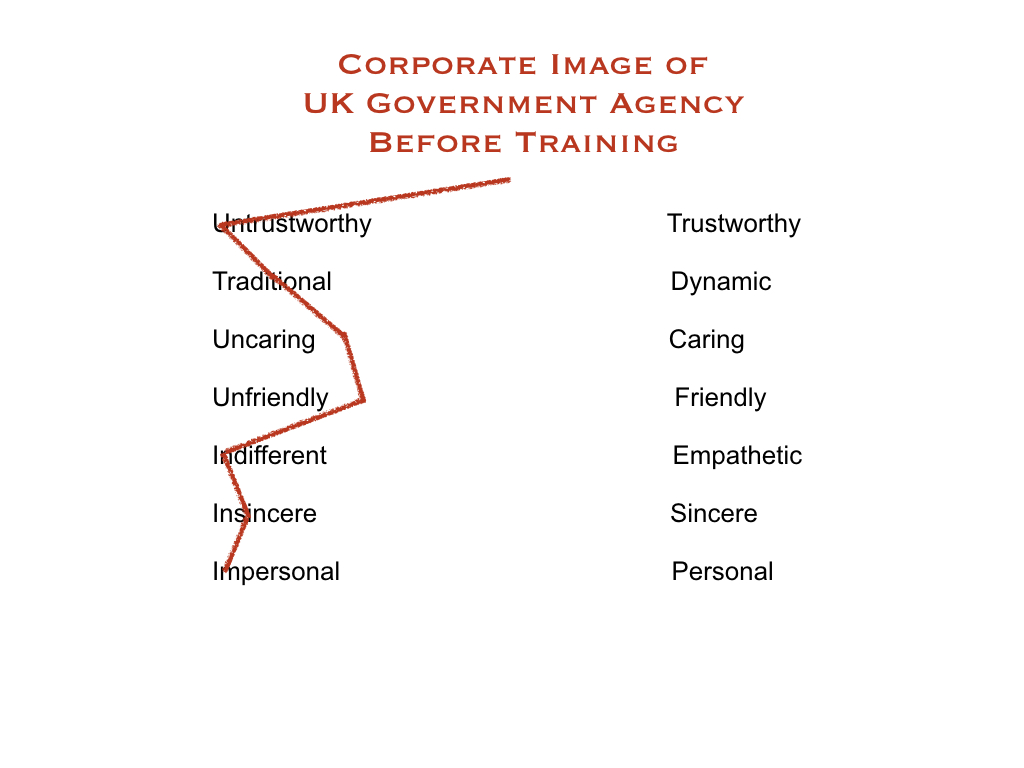
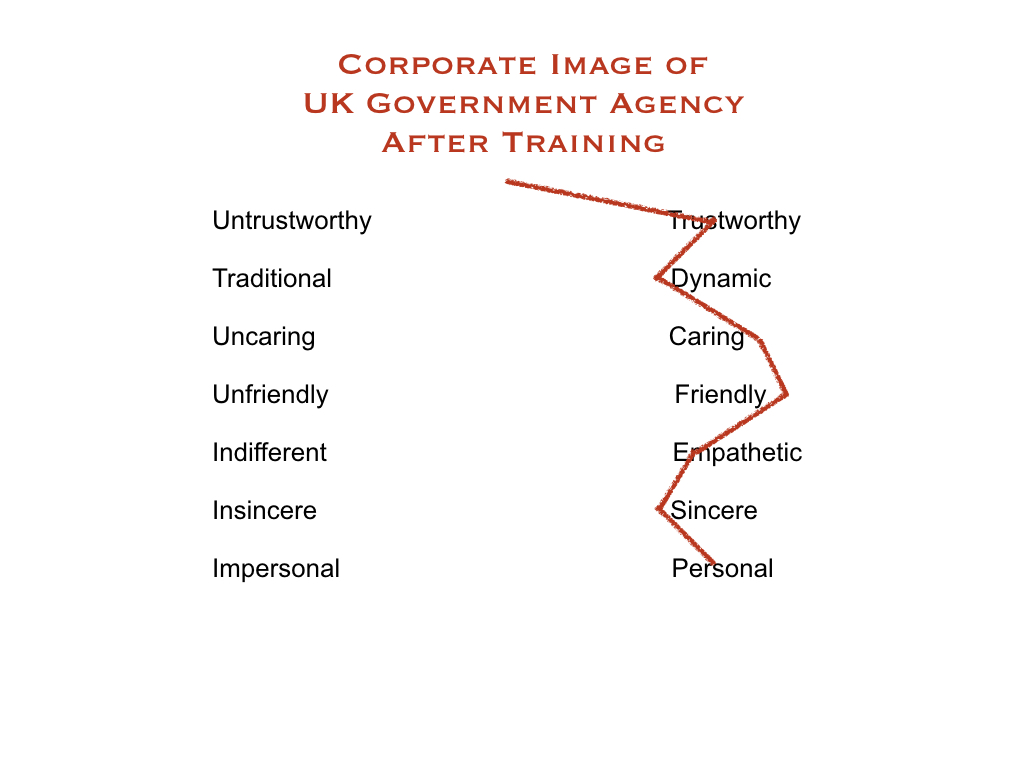
The ‘Smart Talk’ programme – the winning title given to the project from an in-house competition – has received excellent feedback.
Comments on the actual course itself range from:
“I’ve been on a lot, a lot of training courses and this is by far the best one, I felt motivated and involved throughout” to “It was fun and interesting, and I enjoyed every minute.”
Those taking a more elevated view said,“Excellent course. It will be a massive help to our reputation” and “Fantastic course. Would highly recommend it to anyone not just on the phone but anyone that deals with the public or third parties.”
And DVLA is delighted to report it has cut its complaints by 20%.
Win-win all round.
Key Personality Measures of Tutors And Assessors
In a wide-ranging study of tutors and assessors in a Welsh educational establishment recently, T2 obtained some interesting results.
The experiment covered several areas: Conflict Styles, Emotional Intelligence (EI), Optimism / Pessimism, Stress and Adaptability.
The first two areas described here aimed to establish the EI of the tutors and assessors, and their Conflict Styles, when interacting with students. We tracked these measures using psycho-metric questionnaires, which the tutors and assessors completed.
The results were then correlated with the independent appraisal of the staff by senior managers in relation to overall job performance. There were only two categories of performance: exceptional or average.
The aim was to establish whether exceptional staff displayed any specific personality traits in relation to Conflict Style and Emotional Intelligence.
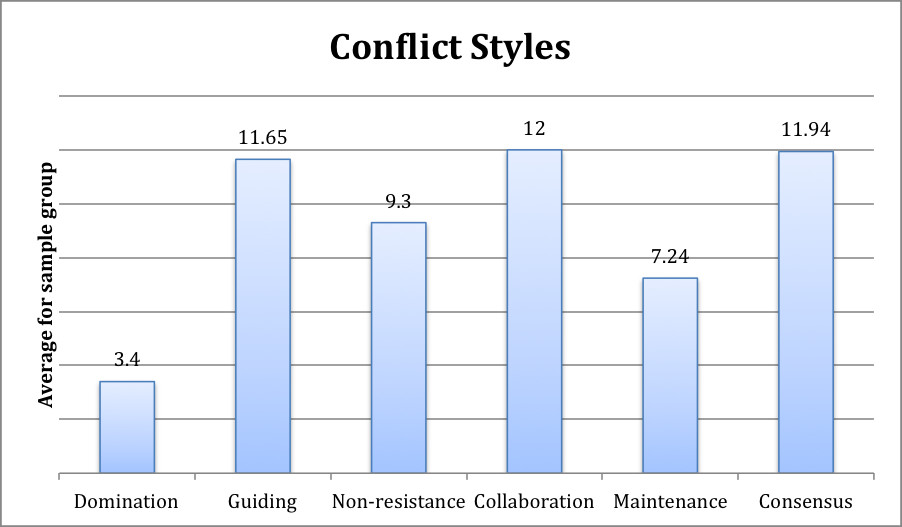
Graph 1.1: Tutors’ and Assessors’ Conflict Styles average scores.
The exceptional tutors and assessors show a preference for guiding students, rather than dominating them.
They also prefer a collaborative style of problem-solving, and have a consensus approach when working with students (Graph 1.1).
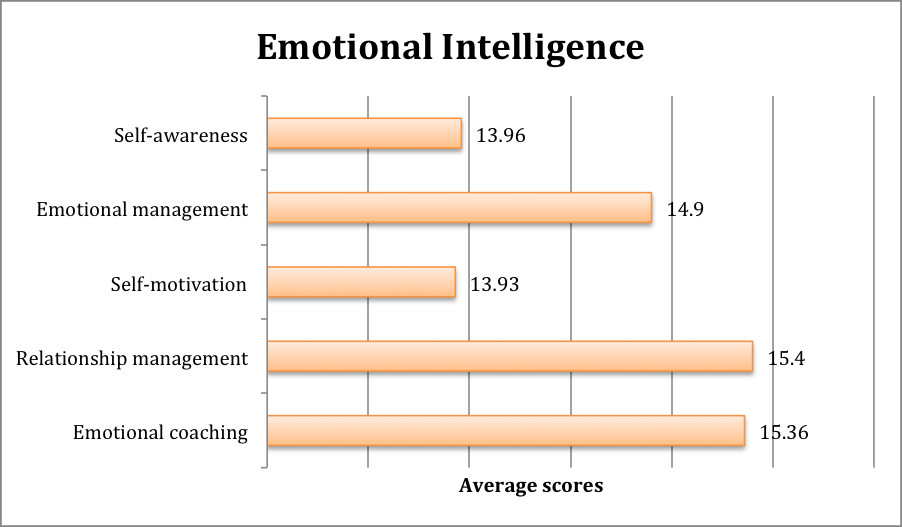
Graph 1.2: Tutors’ and Assessors’ Emotional Intelligence average scores.
Whilst on the Emotional Intelligence measure (Graph 1.2), the strongest aspect that characterises exceptional tutors and assessors is their desire to work with people.
Relationship management and emotional coaching emphasise the desise to support and develop students.
It is clear that these data show positive trends of qualities that could be applied in the selection and development of tutors and assessors in a college environment.
In following articles, we will have a closer look at further personality traits that can assist in the recruitment of exceptional tutors and assessors.