
One week after our first series of programmes in Dubai, our client has already doubled the number of complaints recovered and boosted customer appreciation by 100%.
Over the past few years, T2’s been on a mission to take Psycho-Linguistics to the U.A.E.
We soon discovered that this is a relatively new concept in this part of the world, and everybody’s really interested in the impact it’s had over the past 25 years with our global clients.
In particular, many Dubai-based companies told us they were keen on improving how their brand comes across amongst their customers – who come from over 70 countries.
It’s not always easy for organisations to live up to their brand. As a result, they often project a different personality and tone of voice from the one that’s been designed by the executive team.
Identifying this gap is exactly what our prominent Dubai client has asked us to do.
After we completed this research, we developed specialist communication programmes that closed the brand gap and took customer communication to new heights.
We started working in a specific division of the company that dealt with high-level complaints.
The series of four-day programmes revolved around Psycho-Linguistics, and included customer communication (spoken and written), psychology, strategies for resolving complaints, and a range of practical exercises including role plays and professional writing exercises.
100% of the participants said that they’ve learnt strategies that will help them be more successful in their jobs.
This initiative has already delivered results: in only one week since the first series of programmes, the company doubled the number of complaints that have been resolved and saw a huge increase in customer appreciations compared to the previous month.
In such a multicultural region, where pleasing all customers may seem like a bit of a mission impossible – that’s not bad.
Playing Games with My Emotions
We did say that our hobbies reveal an awful lot about us – much more than we think they would (see “Tell Me Your Hobby. I’ll Tell You Your Style”, 26 Sept. 2016).
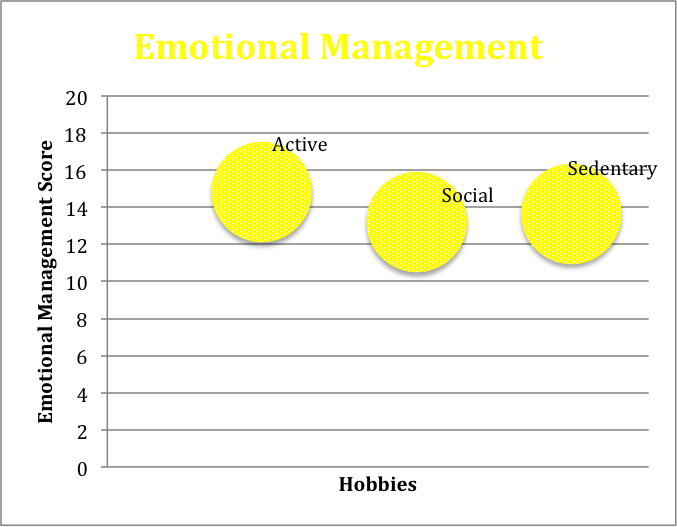
Consider emotional management – one of the most useful and difficult EI skills to master. Would you have guessed there is a correlation between a person’s hobby type and emotional management level?
Yet this is what we found out.
Customer service advisors with active hobbies seem to be able to keep their emotions at bay more than those with sedentary or social pastimes.
Could this be the umpteenth positive effect of exercise – not only benefitting our physical health and boosting our brain power, but also strengthening our emotional management?
Want to know more about Emotional Intelligence and how it can enhance your team’s performance? Get in touch with T2’s Psychologists today.
Can’t We All Just Get Along?
Conflict. Conflicto. Conflit. Konflikt. Conflito. Conflitto. There doesn’t seem to be much difference in the ways various tongues express the concept of conflict.
What is distinct is the way each and every one of us reacts in a situation of conflict, and tries to manage it. There is no right or wrong approach, just different ones depending on the situation.
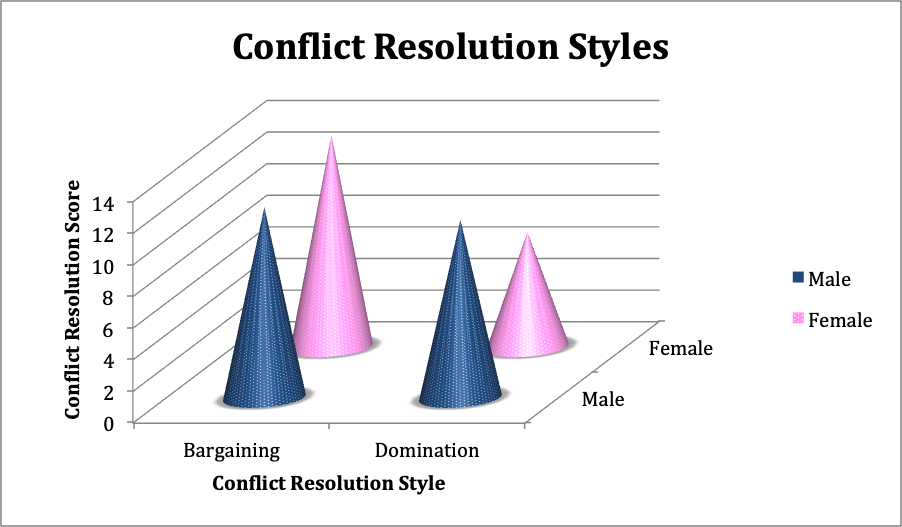
We’ve assessed the conflict resolution styles of a group of contact centre agents, and some gender preferences came to the surface. While most styles don’t display any remarkable variation between male and female agents, it appears that women score higher on bargaining, and men score higher on domination.
As Desmond Tutu – the famous Peace Nobel Prize Winner – says, next time you’re facing conflict, “Don’t raise your voice, improve your argument” – in whatever language that may be.
T2 workshops give delegates tools and strategies to comprehend the process of conflict, deal with it, and minimise it in the future.
No Man Is an Island: Relationship Management in Contact Centres
Emotional Intelligence (EI), or the ability to understand and manage our emotions, is becoming increasingly prominent in today’s society.
In Emotional Intelligence 2.0 (2009), Travis Bradberry and Jean Greaves identify the four EI skills in self-awareness, self-management, social awareness and relationship management.
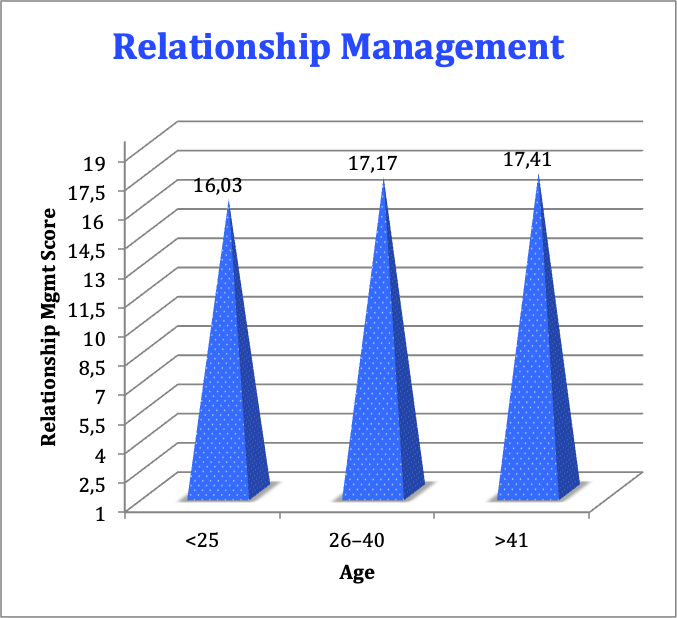
Our research into EI levels in the Contact Centre Industry suggests that agents younger than 25 years old tend to score lower on relationship management than the 26–40 and over 41 age groups.
This is to be expected, if we keep in mind that relationship management – like any other EI skill – can be practiced and developed with time.
What is more notable is that, by virtue of its very nature (which involves dealing and communicating with people of all ages and backgrounds) the customer service sector may be a valuable platform to improve relationship management skills. And this is why those who have worked in a customer-facing position for longer achieve higher scores.
T2 programmes will equip you with all necessary techniques to enhance your communication and collaboration skills, with the added value of a customer-service focus.